

Kettlebell 300 Workout: A Scalable 30-Day Plan

A kettlebell 300 workout counts 300 total repetitions across a circuit.
The number makes the session easy to track, but it does not guarantee faster fat loss, better conditioning, or a specific result in 30 days.
This version uses a four-week ramp with three sessions per week.
You can begin with 100 total repetitions, build toward 200, and treat 300 as an optional final target.
The goal is to finish with the same control you showed at the start.
What the Kettlebell 300 Number Means
The 300 is the total for the workout, not 300 repetitions of every exercise.
Using five movements for six rounds of 10 repetitions creates 300 total repetitions.
A new kettlebell user does not need to begin there.
The same five-movement circuit can produce 100 total repetitions with four rounds of five repetitions.
It can produce 200 with five rounds of eight repetitions.
This makes the format flexible without changing the basic exercise order.
The American College of Sports Medicine emphasizes that resistance-training volume should match the person, goal, and ability to recover.
Its updated resistance-training guidance also favors consistent training over unnecessary complexity.
That principle matters more than reaching a round number on the calendar.

Before You Start
Learn the basic movement patterns before trying to complete them under fatigue.
You should be able to perform a controlled hip hinge, squat, row, lunge, and press with a light load.
If the kettlebell swing is new, use a kettlebell deadlift in the circuit first.
The deadlift teaches the same hip-hinge pattern without the speed or momentum of a swing.
Clear enough floor space for the bell to travel without hitting a wall, furniture, another person, or a pet.
Wear shoes that provide a stable base, or follow your coach's guidance about barefoot training in an appropriate setting.
If you are still deciding which free weight fits your training, see our kettlebell versus dumbbell comparison.
People with an injury, ongoing pain, a medical condition, or a long break from exercise should get individualized guidance before beginning.
Choose Your Starting Level
Start with the lowest level that lets you keep clean technique through the final round.
The first session is an assessment, not a test of willpower.
Start: 100 Total Repetitions
Complete five repetitions of each movement for four rounds.
This level gives you time to learn transitions and decide whether the selected kettlebell is manageable.
Build: 200 Total Repetitions
Complete eight repetitions of each movement for five rounds.
Move here only when the 100-repetition session feels steady from the first exercise to the last.
Optional Target: 300 Total Repetitions
Complete 10 repetitions of each movement for six rounds.
The 300-repetition version is optional, and repeating the 200-repetition level is a valid training choice.
For one-sided exercises, alternate sides and keep the total balanced across the session.

The Five-Movement Kettlebell Circuit
Use one manageable kettlebell and keep the exercise order consistent during the first two weeks.
Consistency makes it easier to notice whether your technique, pace, and recovery are improving.
1. Kettlebell Deadlift or Two-Hand Swing
Place the kettlebell slightly in front of your feet and push your hips back to reach it.
Keep your spine long, brace your trunk, and stand by driving through the floor and extending your hips.
Use the deadlift until you can repeat the hinge without turning it into a deep squat.
Progress to the two-hand swing only after the loaded hinge feels automatic.
2. Goblet Squat
Hold the kettlebell close to your chest with both hands around the horns.
Sit between your hips while keeping your whole foot in contact with the floor.
Your knees may travel forward when your ankle mobility and proportions allow it.
Use a depth that lets you keep your feet planted and your trunk controlled.
3. Supported One-Arm Row
Place your free hand on a stable bench or support and step into a balanced stance.
Pull the kettlebell toward your hip without twisting your shoulders toward the ceiling.
Alternate sides each round, or split the planned repetitions evenly within every round.
4. Reverse Lunge
Hold the kettlebell at your chest and step one foot backward.
Lower through a range you can control, then press through the front foot to stand.
Use a bodyweight reverse lunge when holding the bell changes your balance or stride.
5. Half-Kneeling Press or Floor Press
Use a half-kneeling press when you can keep your ribs stacked over your pelvis.
If overhead motion is uncomfortable or difficult to control, use a floor press instead.
Press with one arm and alternate sides so both receive similar work.
How to Run Each Session
Warm up for five to 10 minutes with easy movement that prepares the patterns you will train.
A practical warm-up can include bodyweight hinges, shallow squats, reverse lunges, and light rows.
Complete the five exercises in order, then rest before starting the next round.
Use roughly 60 to 120 seconds between rounds as a starting point.
Take more time when your breathing prevents you from bracing or following the planned technique.
The workout is not a race.
Record the load, completed rounds, and any exercise you changed.
Stop the session when you cannot restore your form with a reasonable rest period.
Do not make up missed repetitions by rushing the next round.
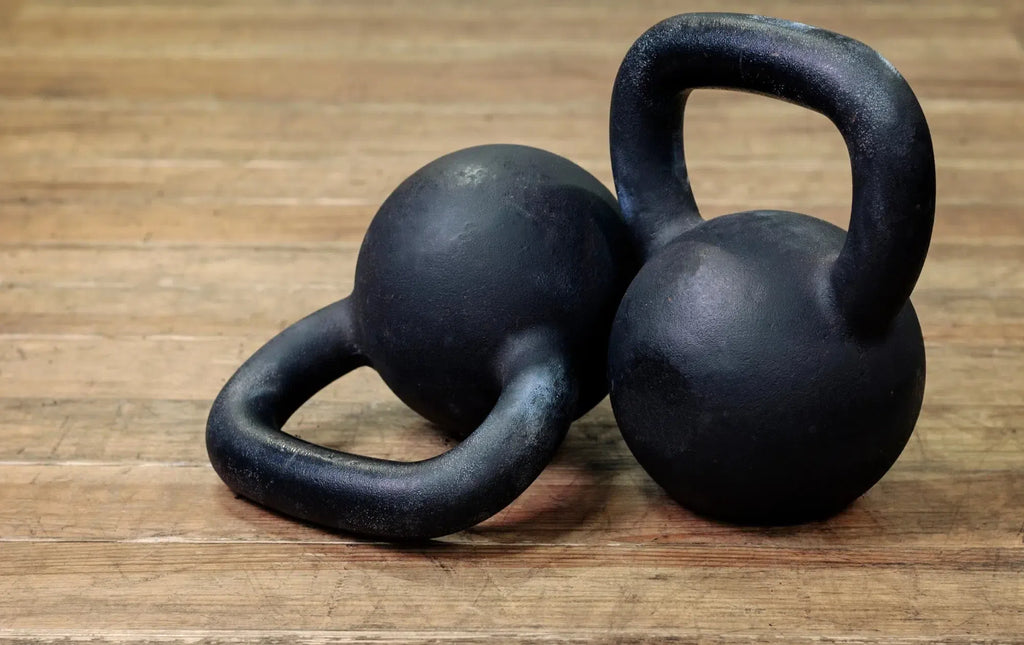
A Four-Week Kettlebell 300 Schedule
Train three nonconsecutive days per week so you have at least one recovery day between sessions.
Walking, mobility work, or another easy activity can fit between sessions when it does not interfere with recovery.
Week 1: Learn the Circuit
Complete 100 total repetitions in each of the three sessions.
Use the easiest appropriate exercise variations and keep the load conservative.
Week 2: Add Repetitions
Complete 125 repetitions in the first session, then 150 in the next two sessions.
Keep the same load unless it was clearly too light and every repetition remained controlled.
Week 3: Build Toward 200
Use session targets of 150, 175, and 200 total repetitions.
Stop a round when the bell starts pulling you out of position or your pace becomes difficult to manage.
Week 4: Decide Whether to Test 300
Complete 150 repetitions in the first session and 200 in the second.
The third session can be another 200 or an optional 300-repetition attempt.
Choose 300 only when the 200-repetition session did not produce lingering fatigue or a loss of technique.

Form Priorities for the Swing and Get-Up
The swing is a fast hip hinge, not a front raise performed with the shoulders.
Push the hips back, keep the bell above knee level during the backswing, and finish tall without leaning backward.
The American Council on Exercise recommends learning a controlled loaded hinge before progressing to ballistic swings.
Its two-hand swing guide also advises selecting a load that preserves form for the planned work interval.
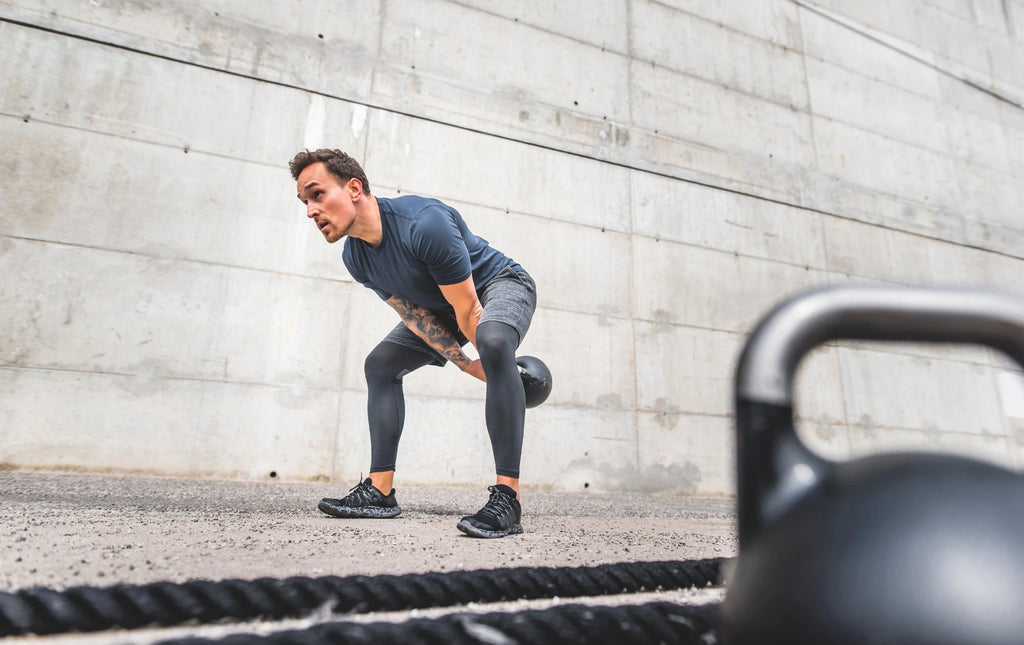
ACE fitness professional Pete McCall demonstrates the two-hand kettlebell swing and its main form cues.
The Turkish get-up is not part of the five-movement repetition circuit.
It is a multi-step skill that should be practiced slowly for a small number of controlled repetitions.
Older 300-workout plans sometimes assign very high get-up totals, but fatigue makes it harder to manage the overhead position and transitions.
StrongFirst demonstrates the major Turkish get-up positions and controlled transitions.
Common Mistakes and Smarter Swaps
The most common mistake is choosing a load for the first round instead of the whole workout.
A bell that feels easy for five repetitions may become difficult after several exercises and short rest periods.
Another mistake is increasing load and repetition volume at the same time.
Change one variable, then see how you recover before changing the other.
Use a deadlift instead of a swing when the hinge becomes rushed.
Use a floor press instead of an overhead press when you cannot keep the ribs and pelvis controlled.
Use an unloaded reverse lunge when the kettlebell changes your balance.
Dedicated abdominal work does not need to be forced into the circuit.
You can train it separately with controlled movements from our Roman chair and VKR tower exercise guide.
What Results Can You Expect?
A four-week block can help you practice the same movement patterns and build tolerance for a longer circuit.
Your result depends on training history, load, technique, sleep, nutrition, and the work you perform outside this plan.
No responsible program can promise a specific amount of fat loss or muscle gain in 30 days.
A randomized study by Lake and Lauder found that twice-weekly kettlebell swing training improved measures of strength in a small group of healthy young men.
The study used timed swing intervals, not this 300-repetition circuit, so it does not validate the challenge itself.
A broader scoping review found promising effects from kettlebell training, but it also rated much of the available evidence as limited or low quality.
The honest conclusion is that kettlebells can support useful resistance and conditioning work when the program matches the person.
The number 300 is simply one way to organize that work.
Frequently Asked Questions
Do I have to reach 300 repetitions?
No. The 100-repetition and 200-repetition versions are complete workouts.
Use the level that lets you keep stable technique and recover before the next session.
Can a beginner use this plan?
A beginner can use the 100-repetition version after learning the five basic movement patterns.
Replace swings with deadlifts and loaded lunges with bodyweight lunges when needed.
How heavy should the kettlebell be?
Choose the lightest load that still feels purposeful and lets you complete the planned session without losing control.
Fixed weight recommendations based only on sex do not account for experience, body size, exercise choice, or movement skill.
Can this workout help with fat loss?
The circuit can contribute to total physical activity, but fat loss cannot be guaranteed from one workout format.
Body-weight change depends on many factors, including overall activity, eating patterns, health, sleep, and consistency.
What should I do after the fourth week?
Repeat the most manageable week, increase the load slightly, or choose a different training goal.
Do not increase load, speed, and volume together.
References
- American College of Sports Medicine. ACSM Publishes Updated Resistance Training Guidelines. 2026.
- McCall, P. The ACE Do It Better Series: The Two-handed Kettlebell Swing. American Council on Exercise. 2025.
- Lake, J. P., and Lauder, M. A. Kettlebell swing training improves maximal and explosive strength. Journal of Strength and Conditioning Research. 2012;26(8):2228 to 2233.
- Meigh, N. J., and colleagues. Kettlebell training in clinical practice: a scoping review. BMC Sports Science, Medicine and Rehabilitation. 2019.
Medical disclaimer: This article is general product information, not medical advice. The equipment described here is not a treatment for any condition. If you have an injury, ongoing pain, or a medical condition, talk to a doctor or physical therapist before using any of it.

![5 Best Dumbbells for Your Home Gym Space [2026]](http://workouthealthy.com/cdn/shop/articles/5_best_home_gym_dumbbells.webp?v=1767584598&width=1080)
Leave a comment