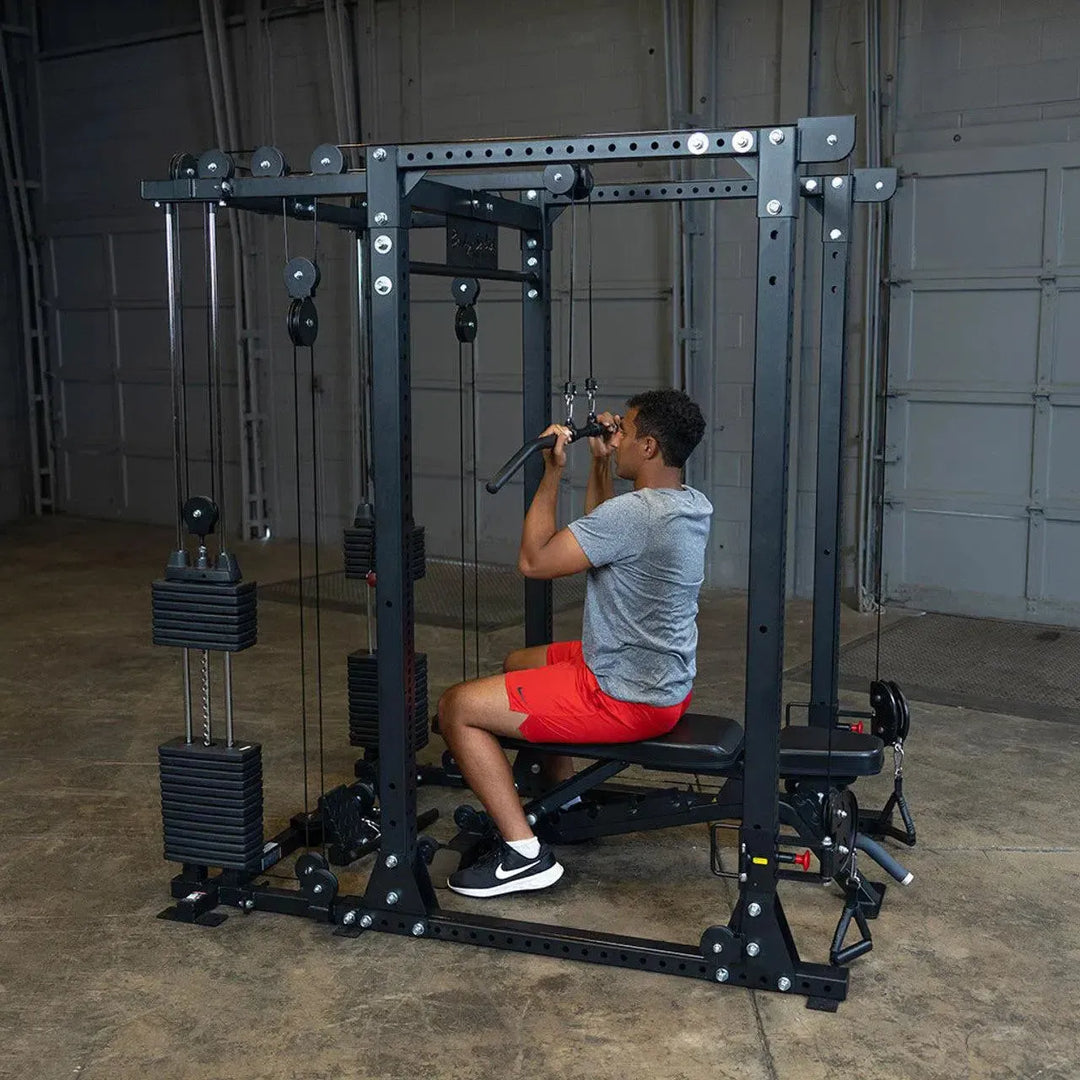
Body-Solid Power Rack with Cable Crossover and Dual 210 lb. Stacks (GPR400-GPRFTS)
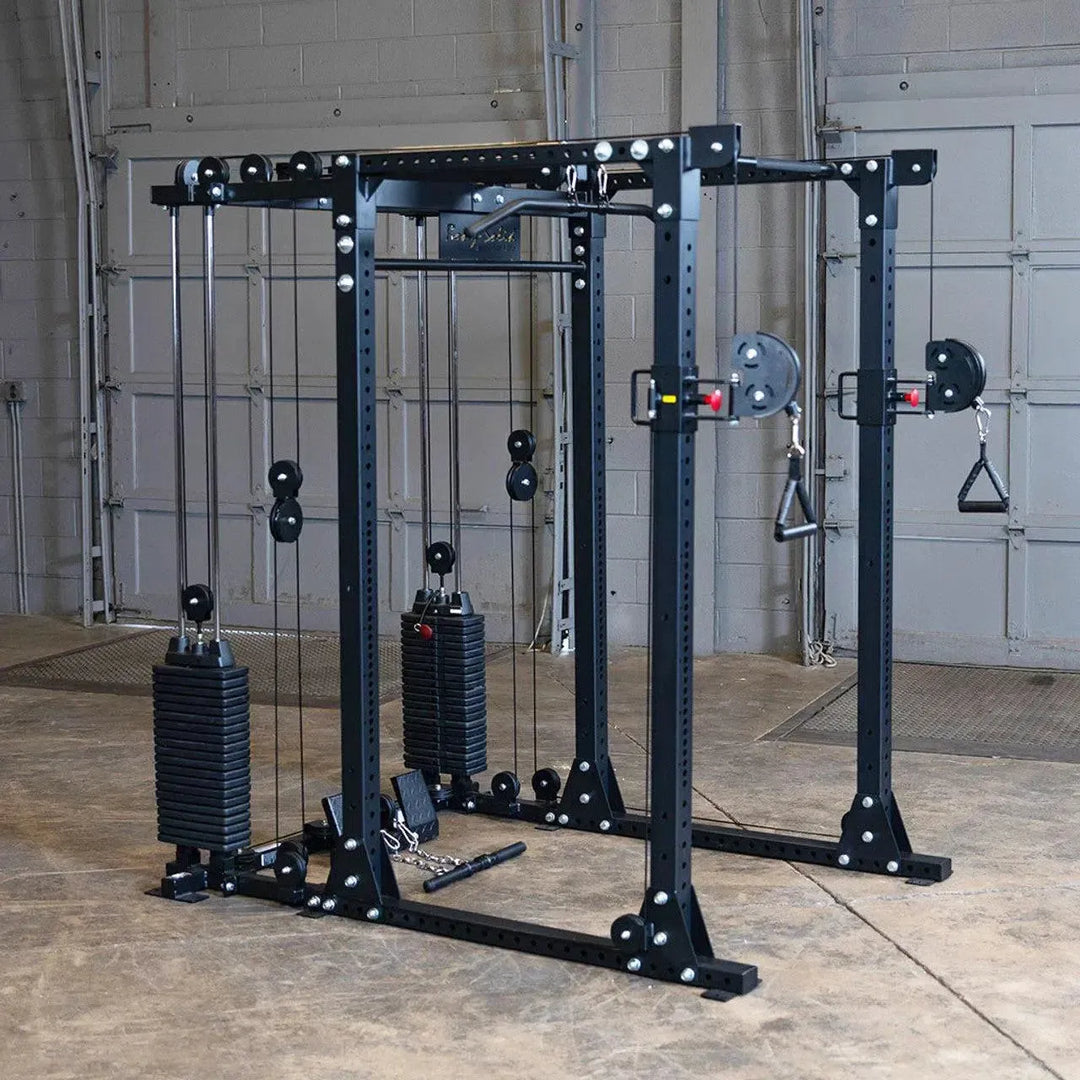
This is not one machine off a shelf. It is two Body-Solid parts bolted into one station: the GPR400 power rack and the GPRFTS functional trainer attachment with two 210 lb. selectorized weight stacks. Body-Solid builds the GPRFTS to fit the GPR400 and nothing else, so the pair works as a single frame rather than two machines pushed together.
You get a cage rated to 1,000 lb. for squats, presses, and rack pulls, plus a full cable crossover with dual lat pulldown and dual low pulleys, in a footprint of about 77 in. by 57 in. The cables run a 1/2:1 ratio, which puts roughly 105 lb. at each handle. More on that number below, because it is the one most shoppers get wrong.
Intended use: Light commercial
What do the two parts each bring?
-
GPR400 power rack. 11-gauge steel mainframe rated to 1,000 lb., with 1 in. hole spacing for the safeties, pipe and pin safeties, J-cup liftoffs, and a 1 1/4 in. (32 mm) pull-up bar built into the top. This is the barbell half: squat, bench, overhead press, rack pull, pull-up.
-
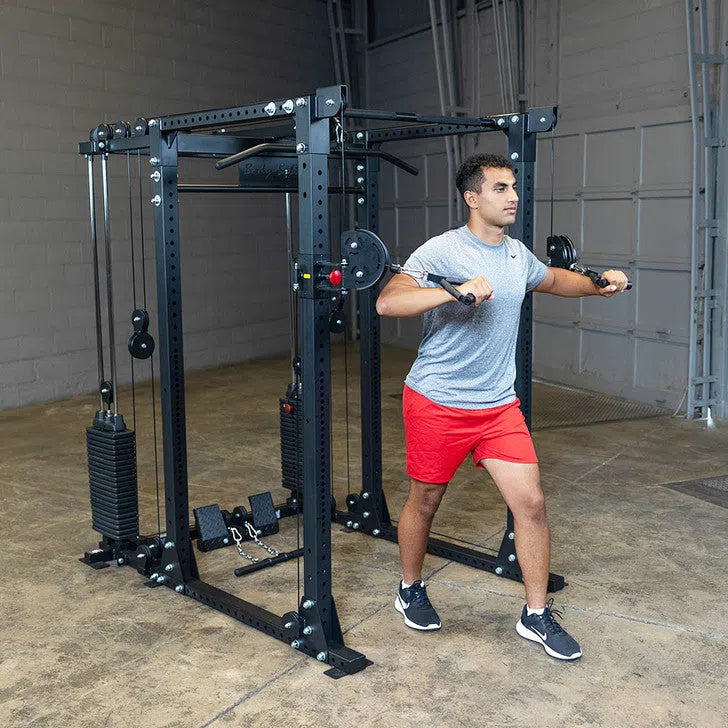
GPRFTS functional trainer attachment. Two 210 lb. selectorized stacks feeding front swivel pulleys, dual lat pulldown pulleys, and dual low pulleys. The front pulleys swivel 180 degrees and slide up and down the rack uprights, with up to 40 height positions per side. This is the cable half: crossovers, presses, rows, pulldowns, chops, curls, and anything you can anchor at a height.
Because the trainer mounts on the rack instead of beside it, the cable stations add about 24 in. of depth and 5 in. of width to the cage rather than needing their own floor space.
How much cable resistance do you actually get?
About 105 lb. per handle, not 210 lb. and not 420 lb. This is the number most shoppers get wrong, so it is worth being plain about.
Body-Solid rates the cable stations at a 1/2:1 ratio. That means each 210 lb. stack pulls back at roughly half its weight at the handle, and gives you about double the cable travel in exchange. Two stacks of 210 lb. is 420 lb. of steel in the machine, and around 105 lb. of resistance on each side when you are standing at it.
Whether that is enough depends on what you use cables for. For crossovers, flyes, face pulls, rotations, curls, triceps work, and single arm pressing, 105 lb. per side is more than most people will ever load. For heavy two handed lat pulldowns or seated rows, it will run out sooner than a 1:1 machine would. The long cable travel is the trade you get in return, and it is what makes standing crossovers and overhead chops work properly.
The barbell side has no such limit. The cage itself is rated to 1,000 lb., so your heavy work lives on the bar and your volume and accessory work lives on the cables.
What can you train on it?
-
Inside the cage. Back squat, front squat, bench press, overhead press, rack pull, and pin press, with the pipe and pin safeties set on 1 in. spacing so you can dial the catch height to your own depth.
-
On the top bar. Pull-ups and chin-ups on the 1 1/4 in. (32 mm) bar.
-
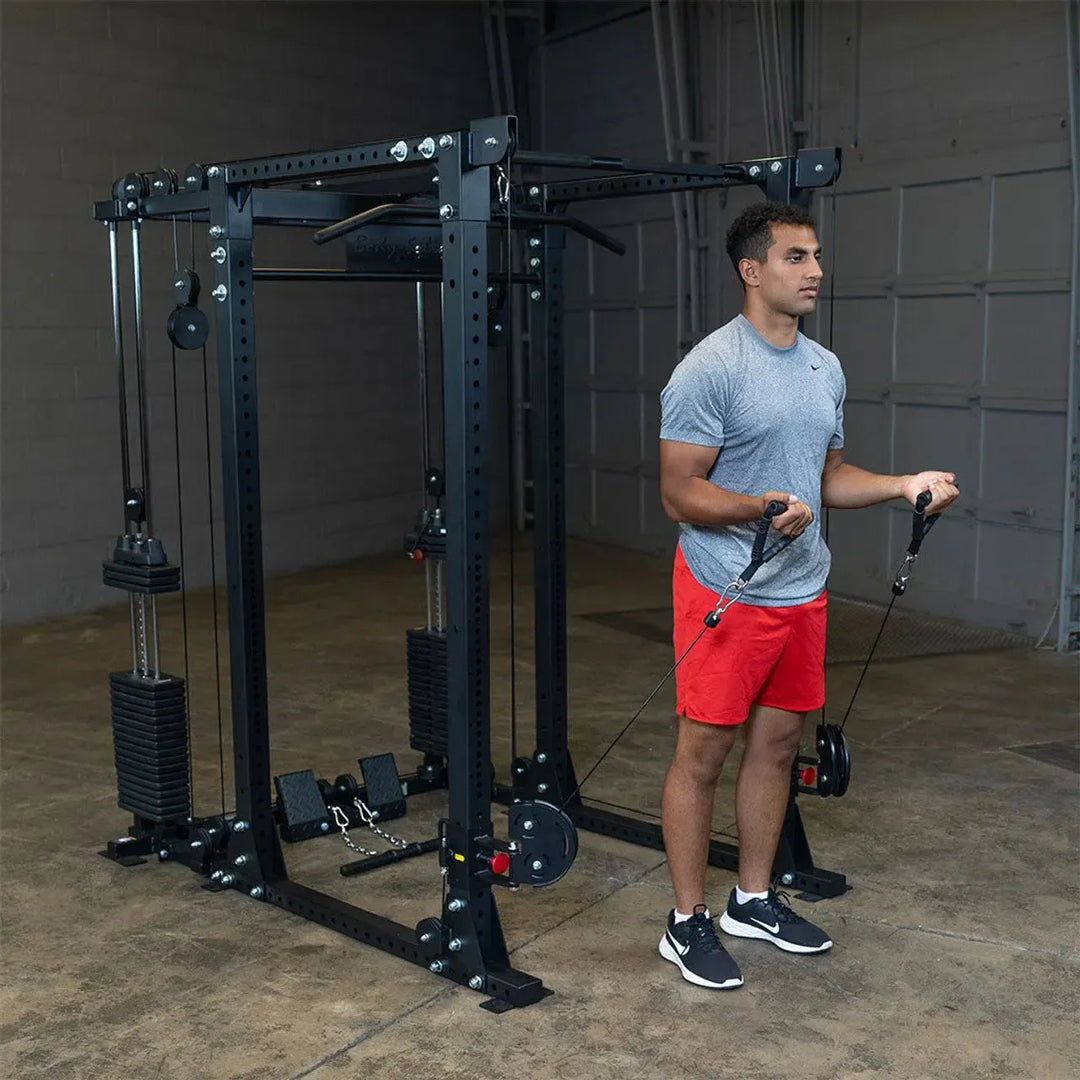
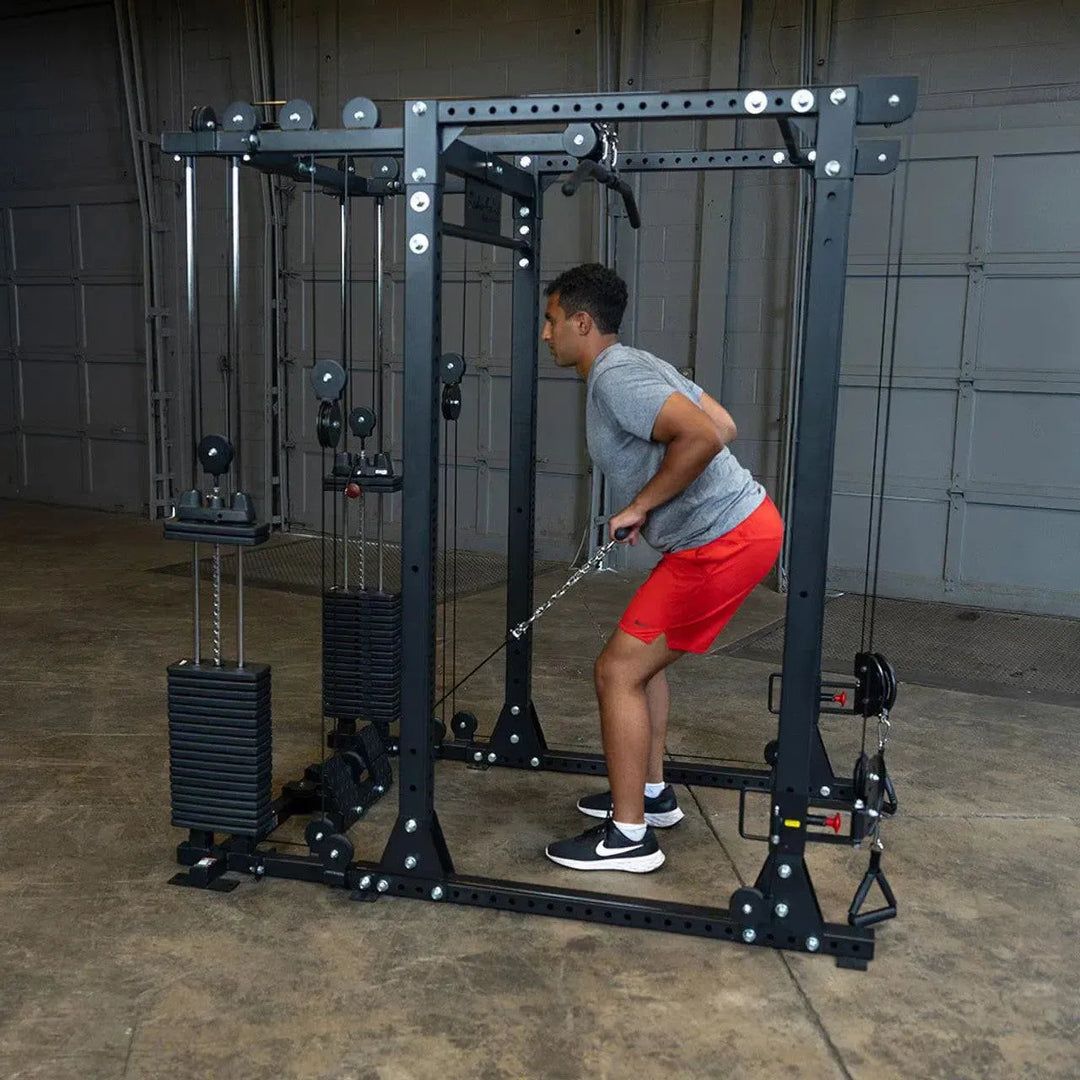
Front pulleys. Standing cable crossovers high, mid, and low. Cable chest press, single arm rows, wood chops, lateral raises, curls, and pushdowns. The 180 degree swivel is what lets you press and pull across your body instead of only straight out from the frame.
-
Lat pulldown pulleys. Wide grip pulldowns, straight arm pulldowns, and face pulls, using the included dual swivel lat bar.
-
Low pulleys. Seated rows, upright rows, curls, shrugs, and ankle cuff work for glutes and hips.
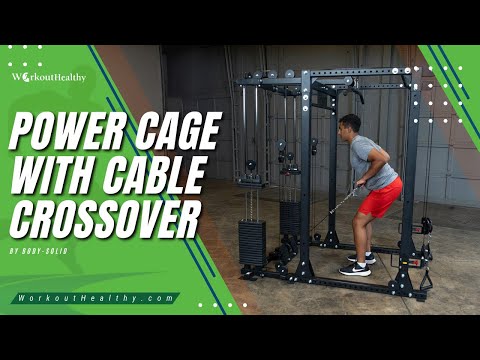
See the stations in use
Our own walkthrough runs the machine station by station, from the cage to the crossover pulleys. It is the fastest way to judge whether the layout suits the way you train, and how much room you will really want around it.
How is it built?
| Component |
Specification |
| Rack frame |
11-gauge steel mainframe, rated to 1,000 lb. |
| Safety spacing |
1 in. holes through the uprights, for the safeties and J-cups |
| Pull-up bar |
1 1/4 in. (32 mm) diameter, integrated into the top of the cage |
| Weight stacks |
Two 210 lb. selectorized stacks, 420 lb. of steel total |
| Cable ratio |
1/2:1, giving roughly 105 lb. per handle and roughly double the cable travel |
| Pulley adjustment |
Up to 40 positions per side, front pulleys swivel 180 degrees |
| Cable stations |
Dual front swivel pulleys, dual lat pulldown pulleys, dual low pulleys |
| Assembled size |
77 in. L x 57 in. W x 81 in. H |
| Assembled weight |
898 lb. total, the 273 lb. rack plus the 625 lb. trainer attachment |
What ships with it?
- GPR400 power rack frame in 11-gauge steel
- Pipe and pin safeties
- J-cup liftoffs
- Integrated 1 1/4 in. (32 mm) pull-up bar
- GPRFTS functional trainer attachment with two 210 lb. selectorized stacks
- Dual swivel curl bar
- Dual swivel lat bar
- Ankle cuff
- Two stirrup handles
- Cables, hardware, and the assembly manuals for both units
This is sold as one fixed package. There are no options to pick at checkout.
Frequently asked questions
Is this one product or two?
Two Body-Solid part numbers shipped and sold together as one station. The GPR400 is the power rack. The GPRFTS is the functional trainer attachment with the weight stacks. The GPRFTS is designed to fit the GPR400 only, so you cannot move it to another rack later.
How much weight do the cables actually give me?
Roughly 105 lb. per side. The stacks weigh 210 lb. each, and the 1/2:1 ratio means you feel about half of that at the handle in exchange for about twice the cable travel.
How much room do I need?
Plan on 77 in. long by 57 in. wide for the frame, and give yourself about 3 ft. of clear floor on the open sides so you can run a full crossover. Body-Solid also publishes a 74 in. width, which is the span when the front swivel arms are rotated all the way out to the sides, so leave room for that if you plan to use them there. Ceiling height of 8 ft. or more is best, since the frame stands 81 in. and you need head clearance above the pull-up bar.
How long does assembly take?
Plan a full day, and longer if you are working alone. Body-Solid's own instructions call for at least two people, and there are 898 lb. of steel to move into position. The rack goes together in three main steps. The functional trainer takes ten, and routing and tensioning the cables is the slow part.
What is the difference between the GPRFTS and the GPRFT?
The GPRFTS has the two 210 lb. selectorized weight stacks, which is what this listing includes. The GPRFT is the plate loaded version of the same attachment, so you supply your own weight plates. Both use the same assembly manual.
Can I bolt it to the floor?
Yes, and for a facility with members on it, you should. At 898 lb. assembled the unit is stable on its own for normal training, but anchoring is standard practice in a commercial room.
Purchase benefits
- Free freight shipping within the continental United States, curbside with liftgate included
- Body-Solid light commercial warranty. The full terms are in the Warranty tab on this page.
- No sales tax outside Maryland
Bottom line: The GPR400-GPRFTS is the right pick when you want a 1,000 lb. rated barbell cage and a real cable crossover on the same frame, and you understand that the two 210 lb. stacks deliver about 105 lb. per handle. If you only need the rack, or you would rather load the cables with plates, those are different part numbers.